

by John Mariotti
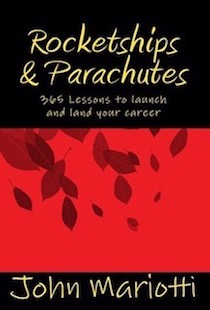 Rocketships & Parachutes will help readers of all ages, at all career stages, capitalize on their knowledge--to know when and how to “launch" their careers on a new trajectory (Rocketships), and also understand when to find a way "to land” (safely via “Parachutes") after a tackling a challenge that somehow didn’t work out as expected.
- Steering a path through a turbulent future, in which the old ways are disappearing, to be replaced faster and faster, is critically important.
- Understanding how and when to take action, lead, follow, manage, strategize and execute are the keys to building a successful career trajectory.
- Knowing when to grab for a parachute and land in a safe and positive way, is the key to keeping those careers moving onward and upward.
- Understanding how to work with people of all kinds, of all ages, in different situations, and create positive outcomes--win-win outcome--is a critical skill for the future.
“Rocketships & Parachutes is a GPS for the spirit and the soul. 365 timeless lessons...accumulated through an amazing lifetime of experience, and written as a love letter to life’s weary travelers. I will pass it on to my children as an essential roadmap for their own professional and personal journey.” --Tom Koulopoulos, author of #1 Bestseller, Revealing the Invisible
This is a book where you MUST buy multiple copies. Get 5, 10 or 20, and give them to everyone you care about. It is a gift that will just keep on giving!
- College grads will realize that it gives them a head start into the world of work--ahead of their peers.
- Gen-Y (Millennials) will treasure it as if they had an experienced mentor at their fingertips, to keep them climbing.
- Gen-X-ers who are moving through their mid-career crises, will see how it helps them stand out from the pack, and begin moving up again.
- Baby Boomers will recognize the years of experience they can tap into, to make their final career climb be the right one.
- Brilliant Entrepreneurs will find the managerial knowhow and expertise they so badly need, but can’t seem to find.
- Self-made people, who have built lives and businesses by sweat and hard work, will learn how to climb higher and when to bail out and try again.
Order it now:
- Paperback
- Kindle
John is one of the greatest business minds of our time. His wisdom and experience have helped so many others launch and land their businesses and careers. This book should be part of everyone’s library for success!” --Dave M. Lukas, Executive & Host of the Misfit Entrepreneur
"John Mariotti has lived an eventful life in business, and it pays to heed the lessons of his years in business. You will be so much better off--more prepared, more valuable, and more wise." -- B. Joseph Pine II, author of Mass Customization and The Experience Economy
“He has written an important book. If we would create our own list of Rocketships and Parachutes moments, we could avoid a lot of problems. For help starting your own list, I can think of no better launching pad than this book." --Rick Maurer, author, Beyond the Wall of Resistance
“...shares a lifetime of wisdom that he makes accessible in a very pragmatic way.”--Scott Alexander, Author of Lead Like a Black Belt
“John … has been there and done it all. …[the] book demonstrates the breadth and depth of his experience as a leader. It is rich with content. … like having a mentor at your fingertips.” --Vice Admiral Ed Straw. USN (retired), Former President, Global Operations, The Estee Lauder Companies